
04/10/2026
News
We wrote a blog in 05/08/2015 lets see how Spain shaped up - https://www.assetfolio.com/news/spain-stability-asset-folio-road-recovery
The tourism boom hitting Spain is being felt most intensely on the Costa del Sol — and nowhere more so than in Marbella.
In 2025, Spain welcomed around 97 million international tourists, the highest figure on record. But the national headline masks a deeper reality: Andalusia was one of the fastest-growing regions, and the Costa del Sol captured a disproportionate share of high-spending visitors. Longer stays, higher daily spend and repeat visitors — particularly from the UK, Northern Europe, the Middle East and the US — are reshaping the local economy.
Marbella has effectively transitioned from a seasonal resort town into a year-round lifestyle and second-home market. Hotel occupancy is no longer just a summer story; winter and shoulder-season demand are now structurally higher than pre-pandemic levels. The knock-on effect is clear: restaurants, retail, services and leisure operate on a 12-month cycle, not a six-month one.
This shift is feeding directly into the property market.
Demand is being driven less by speculative buyers and more by end-users relocating lifestyle, tax residency or capital. Buyers are staying longer, spending more and — crucially — buying higher up the price curve. Prime and ultra-prime segments in Marbella, Benahavís and Estepona continue to see pressure on supply, not demand. New-build stock remains limited, and planning constraints mean that scarcity is structural, not cyclical.
The result is predictable: prices are holding firm or rising, even as transaction volumes in other European markets soften under higher interest rates. On the Costa del Sol, tourism strength has translated into residential resilience.
Employment data reinforces the trend. Tourism-linked jobs across Málaga province are at or near record levels, pushing unemployment well below historical norms. This has supported domestic consumption and reinforced confidence in the local economy — a sharp contrast to the post-2008 period, when construction collapse gutted employment.
The transformation is especially striking given where Spain — and Andalusia — came from. During the financial crisis, the Costa del Sol was ground zero for overdevelopment. When the property bubble burst, demand evaporated, credit froze and values collapsed. Marbella went from Europe’s boomtown to a cautionary tale almost overnight.
Today, the model is fundamentally different.
Leverage is lower, buyers are more equity-driven, and demand is international rather than domestic-credit-fuelled. At a national level, Spain is now growing at around 2.8%, well ahead of the euro-zone average, and tourism remains the single most important engine of that growth. On the Costa del Sol, that engine is running hotter than almost anywhere else in the country.
That said, success is creating friction.
Housing availability is tightening, especially in rental markets. Infrastructure — roads, water, healthcare and schools — is under pressure. Local protests about overtourism, short-term rentals and affordability are no longer abstract political noise; they are part of the operating environment.
For Marbella, the challenge is not attracting demand. That battle is already won.
The challenge is managing growth without eroding the lifestyle and quality that made the destination desirable in the first place.
What is clear is this: Marbella is no longer riding Spain’s recovery — it is one of the places driving it.
Sales, new-build and off-plan, and property management. Tell us what you are looking for and we will point you the right way.
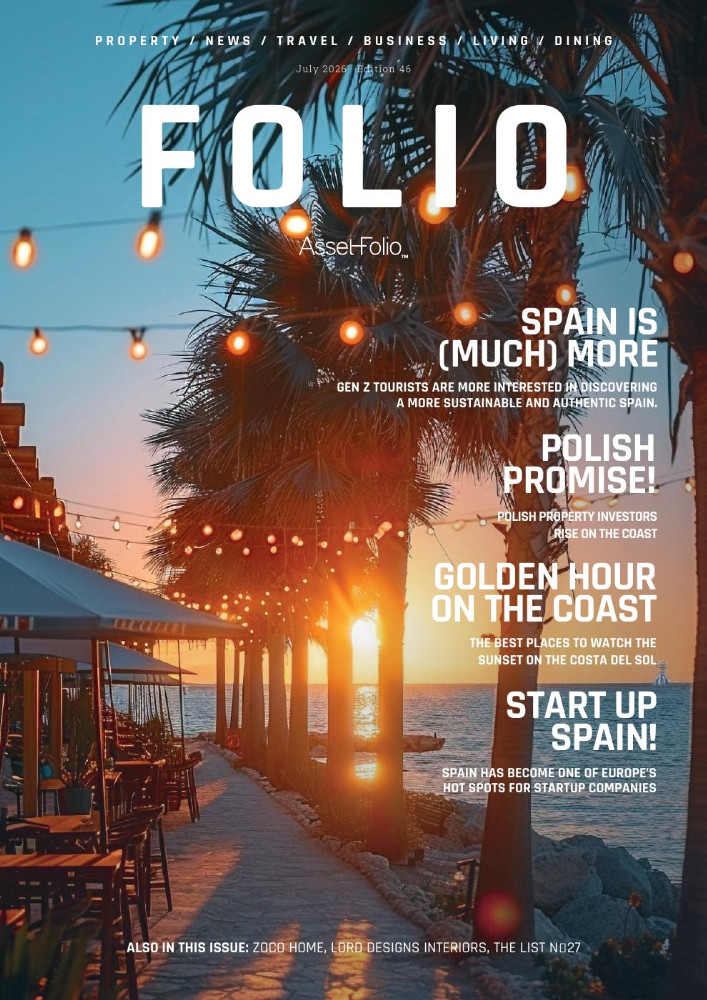
Folio magazine
Issue 46 · July 2026 Latest
Join our newsletter and receive our free magazine.
You’ll also get the latest folio, news, properties and market insights.